Walk along the timeline and discover how the city has been shaped through the centuries. From major floods and bombings to famous residents and extraordinary events.
The English translation of the timeline can be found at the bottom of this page as a downloadable PDF document.
The timeline
This timeline shows some important moments in the history of the municipality of Vlissingen. It was decided to combine years with a short text and an illustration.
1315: City rights of Vlissingen
Old Vlissingen is first mentioned in the year 1235. Near Old Vlissingen, the port town of Nieuw-Vlissingen develops. In 1315, the town receives city rights from Count William III. Due to its location by the sea, Vlissingen is important.
1369: The coat of arms of Vlissingen
The coat of arms appears for the first time in 1369, on a seal attached to a letter. It depicts a pilgrim's flask. What the coat of arms means exactly is not clear. There are multiple explanations. The shape of the flask changes over the centuries.
1444: Vlissingen Fisher City
In the Middle Ages, Flushing is a fishing town, best known for herring. Fishermen from Southern Walcheren had to bring their herring ashore in Flushing. The construction of a new harbor in 1444 emphasizes the importance of fishing for the city.
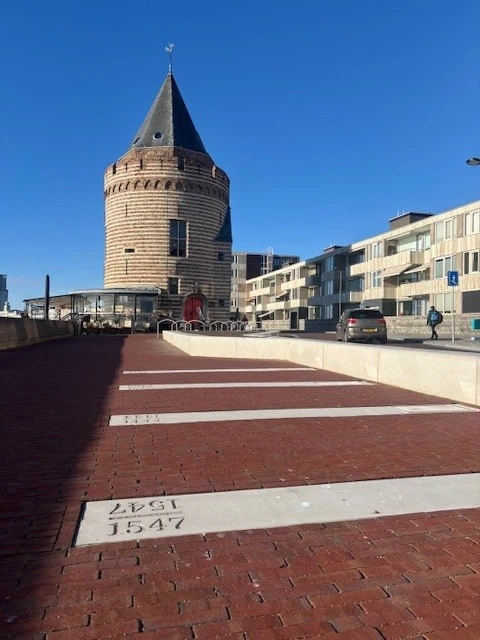
1547: Fortification of the city
Vlissingen lies at the crossroads of the North Sea and the Western Scheldt. Charles V therefore called Vlissingen ‘the key to the Netherlands’. He had the Imperial Bastion and Fort Rammekens built to defend the city and its surroundings.
1572: Vlissingen in revolt
During the Eighty Years' War, Vlissingen manages to liberate itself from the Spaniards. It is the first city in the Netherlands to succeed in doing so. This event takes place on April 6, 1572. The city receives an encouraging letter from William of Orange.
1654: Lampsins Trading House
The Vlissingen trading house Lampsins symbolizes trade and the slave trade with the West Indies, privateering, and administration. Adriaan and Cornelis Lampsins founded a colony on the island of Tobago in 1654. Cornelis had the Lampsins House built on the Nieuwendijk.
1666: The Four Days' Battle
During the Anglo-Dutch Wars, Michiel de Ruyter defends the trade interests of the Republic. He plays a major role as admiral of the fleet, for example during the Four Days' Battle (1666). His flagship is named the Zeven Provinciën.
1738: The sharp pen of Betje Wolff (1738 – 1804)
Writer and poet Betje Wolff is a pioneer of women's emancipation and fights against intolerance and injustice. She is endowed with a sharp pen, just like her contemporary Jacobus Bellamy (1757-1786).
1770: Vlissingen and the slave trade
Between 1750 and 1780, Vlissingen was economically dependent to a significant extent on the slave trade. Ships from Vlissingen transported 60,000 Africans as slaves from West Africa to the West Indies. A dark chapter in history.
1779: Lifesaver Frans Naerebout (1748 – 1818)
Pilot and fisherman Frans Naerebout rescues a large number of the crew of the VOC ship Woestduyn off the coast of Zoutelande. Jacob, Frans' brother, and other fishermen also take part in this heroic rescue.
1808: The flood of 1808
During this flood disaster, 31 residents of Vlissingen lose their lives. Floods have been part of Vlissingen's history for centuries. The city is favorably situated by the sea, but must also constantly wage war against the water.
1809: An English bombardment
The city is vulnerably situated on the Westerschelde and North Sea. During the English bombardment, the town hall on the Grote Markt and numerous other buildings are destroyed. After the departure of the French occupier in 1813, the city is left destitute.
1841: Erection of statue for Michiel de Ruyter (1607 – 1676)
In the nineteenth century, appreciation for the seventeenth century grows. Well-known naval heroes, painters, and writers from that time are honored with a statue. What would Michiel de Ruyter himself have thought of this?
1875: Establishment of De Schelde shipyard
Thousands of workers find employment here. The shipyard dominates the city, and strikes sometimes bring the work to a standstill. The Willem Ruys is the most famous ship that De Schelde has built. Throughout the entire Second World War, the ship lay on the slipway.
1911: St. James's Church destroyed by fire
The church dates from the early fourteenth century. Religion plays an important role for centuries. The deceased are buried in and around the church for a long time. After the rebuilding, the church remains the eye-catcher in the center of Vlissingen.
1944: A heavily bombed city
During the war, Vlissingen endures more than 75 bombardments. Countless times the air raid siren goes off. The Battle of the Scheldt in the autumn of 1944 brings many casualties and devastation to Vlissingen.
1946: Reconstruction and cleanup
At the end of the Second World War, there is hardly an undamaged building left in the city. Devastated neighborhoods are rebuilt. In the years that follow, the city center undergoes clearance and redevelopment. A period of determination and resilience.
1960: Vlissingen-Oost industrial area
Following the polder reclamation of the Sloe, a large industrial area is established. Major industrial companies set up operations in Vlissingen-Oost. Shipyard De Schelde largely relocates its activities to this location.
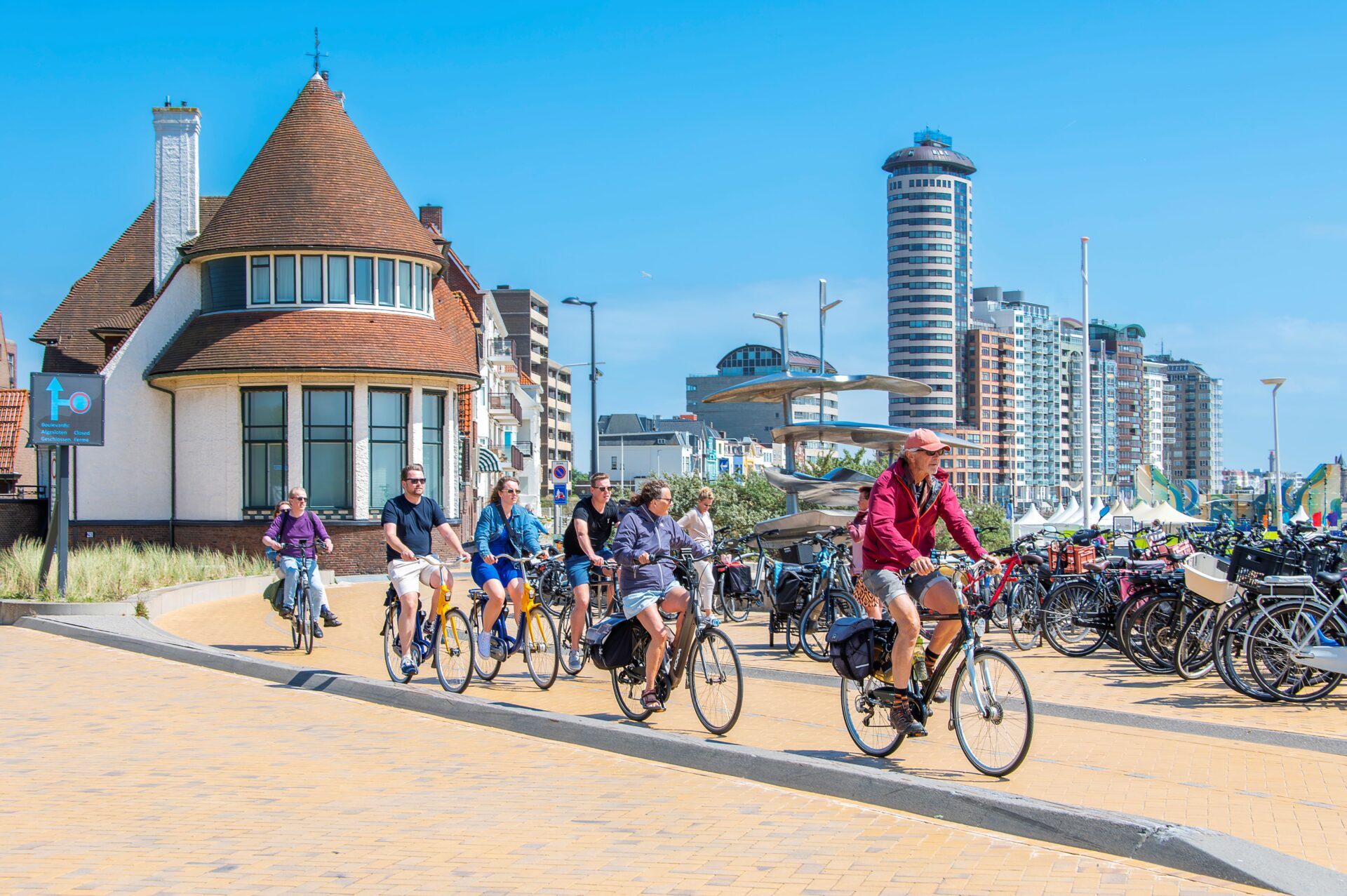
2000: The Boulevards as an eye-catcher
Vlissingen-Bad and Vlissingen-Stad, both lie on the boulevard and give Vlissingen a face from the sea. Nowadays, high-rise buildings also define the appearance of the boulevard. And not to forget: nowhere else do ships sail so close.
2025: Commemoration
Vlissingen is a city of falling, getting back up, and pushing on. Its location by the sea plays no small part in that. Over the centuries, this has cost countless citizens and soldiers their lives. By remembering them, we do justice to history.